KNUST Photonics Team Empowers Young Learners with Hands-On Photonics Education for Underserved Schools
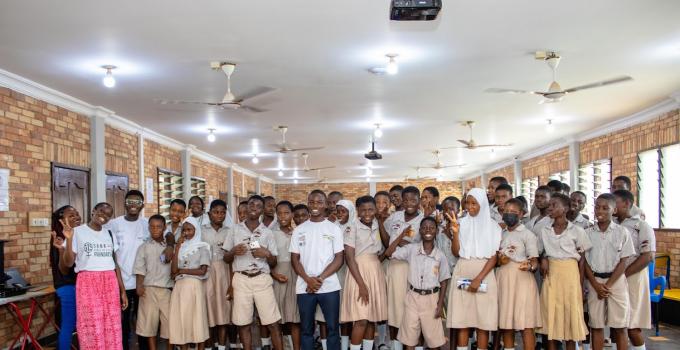
The Ghana Photonics and Optics Laboratory (GPOL), led by Dr. Akyana Britwum, Dr. Michael Kweku Edem Donkor and Mr. Martin Kusi of the Department of Physics at the Kwame Nkrumah University of Science and Technology (KNUST), has embarked on a photonics outreach initiative across Accra.
The programme, organised in partnership with the Ghana Christian International High School (GCIHS), targeted underserved schools in Dodowa and surrounding communities, many of which lack basic science laboratories.
In collaboration with the KNUST Photonics Student Chapter (KPSC), the GPOL team engaged more than 500 students through demonstrations, interactive learning sessions, and teacher support. The outreach aimed to introduce students to the fields of optics and photonics, spark early interest in science, and encourage future careers in STEM.
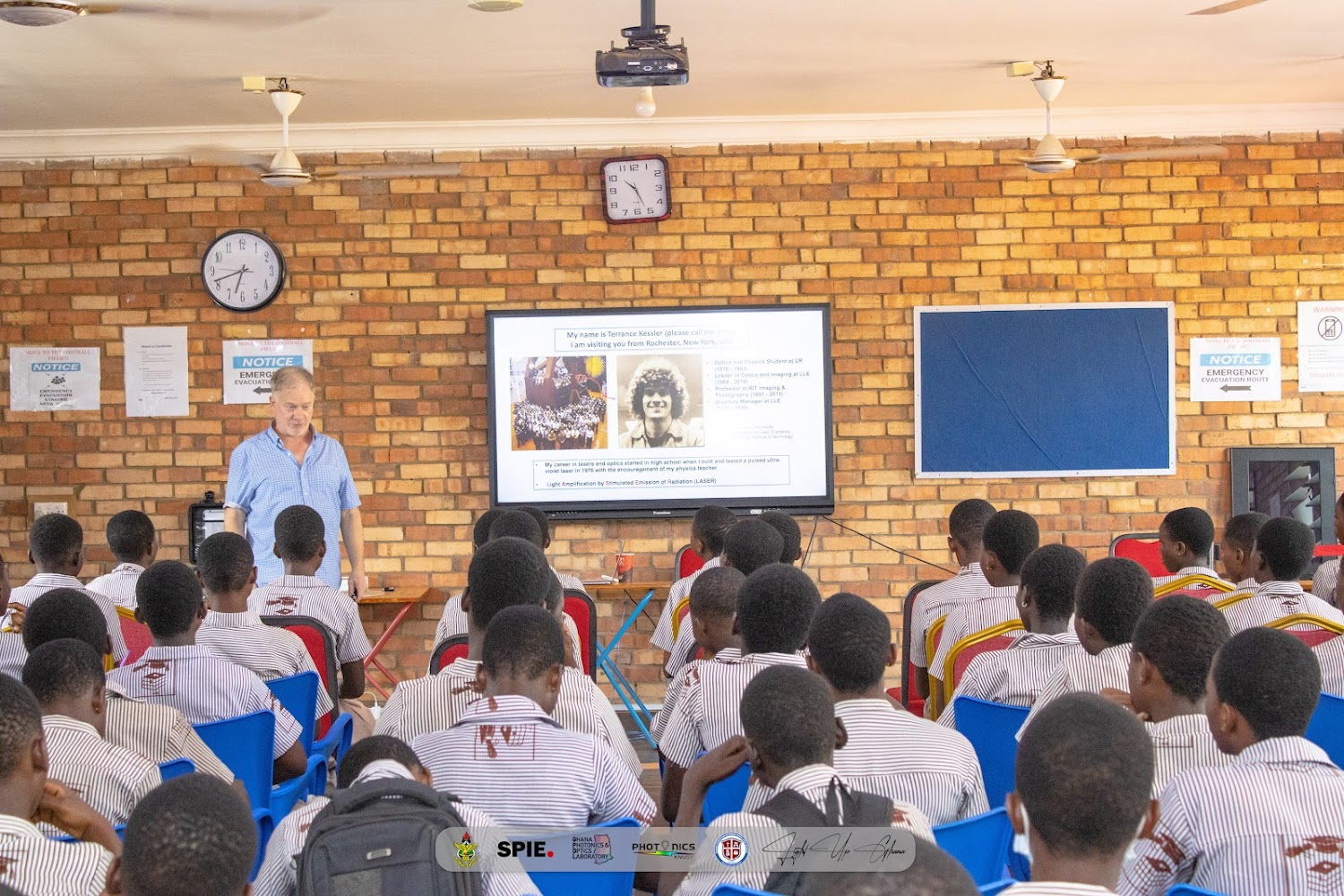
The Principal Investigator, Dr. Akyana Briritwum explained that the outreach is a deliberate effort to bridge the awareness gap around photonics in Ghana.
“We are intentional about this outreach because many people have never even heard of photonics. When we visit schools, our goal is to create awareness. These outreaches are very hands-on; we let students perform the experiments themselves. We want to empower the next generation of photonics and optics scientists in Ghana,” he said.
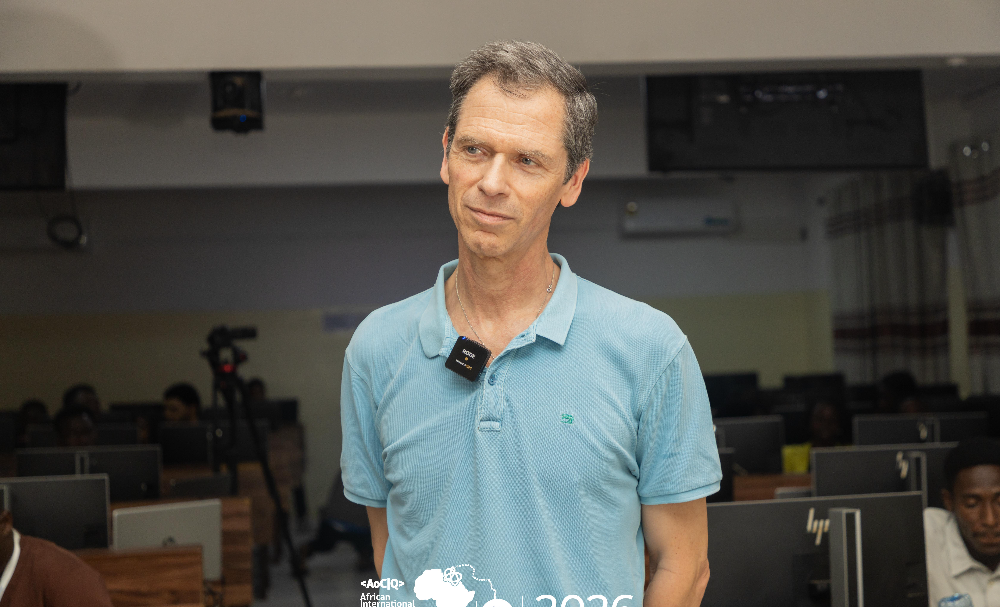
Terrance Kessler, Senior Research Engineer and Diversity Manager at the Laboratory for Laser Energetics (LLE) at the University of Rochester, facilitated the hands-on practical sessions. He emphasised that exposing young minds to optics and laser science can help shape their academic aspirations.
“The goal of bringing education on optics and lasers to students is to expose them to a variety of scientific concepts and technologies so they can begin to dream about their own education and careers in the future,” he said.
Kessler reflected on how his own fascination with lasers and optics began in high school, noting that early exposure can be transformative.
“I want students to know the enjoyable aspects of light, how it moves, how it operates, and how it makes things happen. When you see the beauty of light, it motivates you to learn about the mathematics and the nature of physics,” he shared.
As part of the initiative, the team donated specially developed STEM and photonics kits co-created with Dext Technologies. Teachers were trained to use the kits, ensuring that participating schools have durable, locally appropriate tools for sustained learning after the outreach. The kits contain lenses that demonstrate light convergence and divergence, mirrors, diodes, lasers, and other optical components that enable students to carry out basic experiments.
The outreach programme was funded by SPIE—the International Society for Optics and Photonics—with additional support from Dext Technologies in developing the photonics kits, and Dr. Ruf Fabian of Helping Hands Libraria and the University of Eastern Finland, who contributed funding for the Photonics Explorer kits.