College of Science Researcher Develop Locally Assembled ERT Monitoring System to Advance Climate-Smart Agriculture Research.
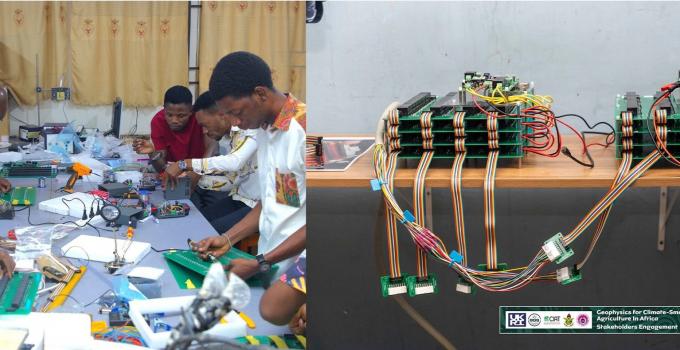
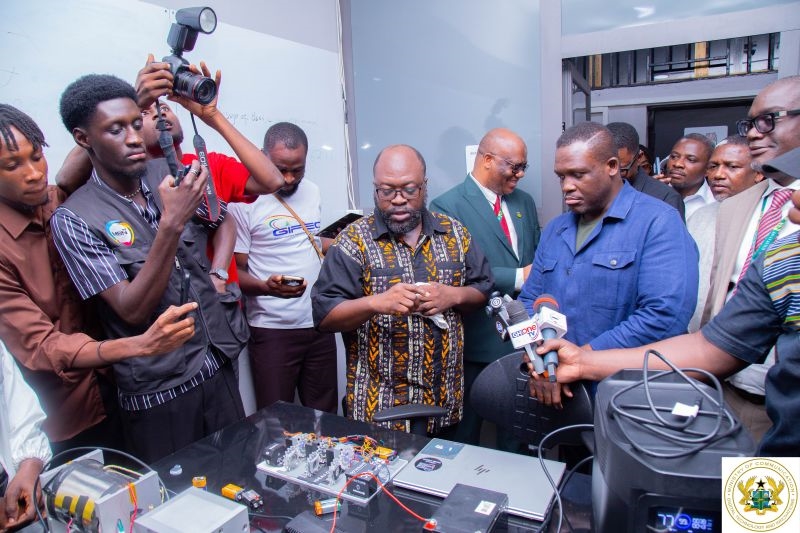
The system is being built and assembled by researchers within the Department of Physics' Instrumentation Unit and the WAGeoLab, with the work forming part of the 𝗚𝗲𝗼𝗽𝗵𝘆𝘀𝗶𝗰𝘀 𝗳𝗼𝗿 𝗖𝗹𝗶𝗺𝗮𝘁𝗲-𝗦𝗺𝗮𝗿𝘁 𝗔𝗴𝗿𝗶𝗰𝘂𝗹𝘁𝘂𝗿𝗲 𝗽𝗿𝗼𝗷𝗲𝗰𝘁.
For the researchers, the significance of the work lies not only in the data the system will generate, but also in the fact that the instrumentation is being built and assembled locally at KNUST.
Prof. Francis Kofi Ampong, Head of the Department of Physics, said the development represents an important shift in the department's application of geophysics.
According to Dr. Michael Kweku Edem Donkor, who leads the instrumentation component of the project, the agricultural geophysics work is heavily dependent on instrumentation, making the development of a local solution an important part of the research.
Rather than providing only a single snapshot of subsurface conditions, the ERT monitoring system is designed to capture changes in the soil over time.
This will enable the research team to investigate changes in soil moisture and subsurface water associated with rainfall, crop water use and different agricultural practices.
Dr. Cyril D. Boateng (PhD), project team member and lead of the West Africa Geophysics (WAGeo) Lab, KNUST, said the project was providing an opportunity to build in-house capacity in geophysical instrumentation and pass those skills on to early-career researchers.
He said the aim was to ensure that the knowledge developed could be multiplied across generations of researchers in Ghana and the wider West African region.
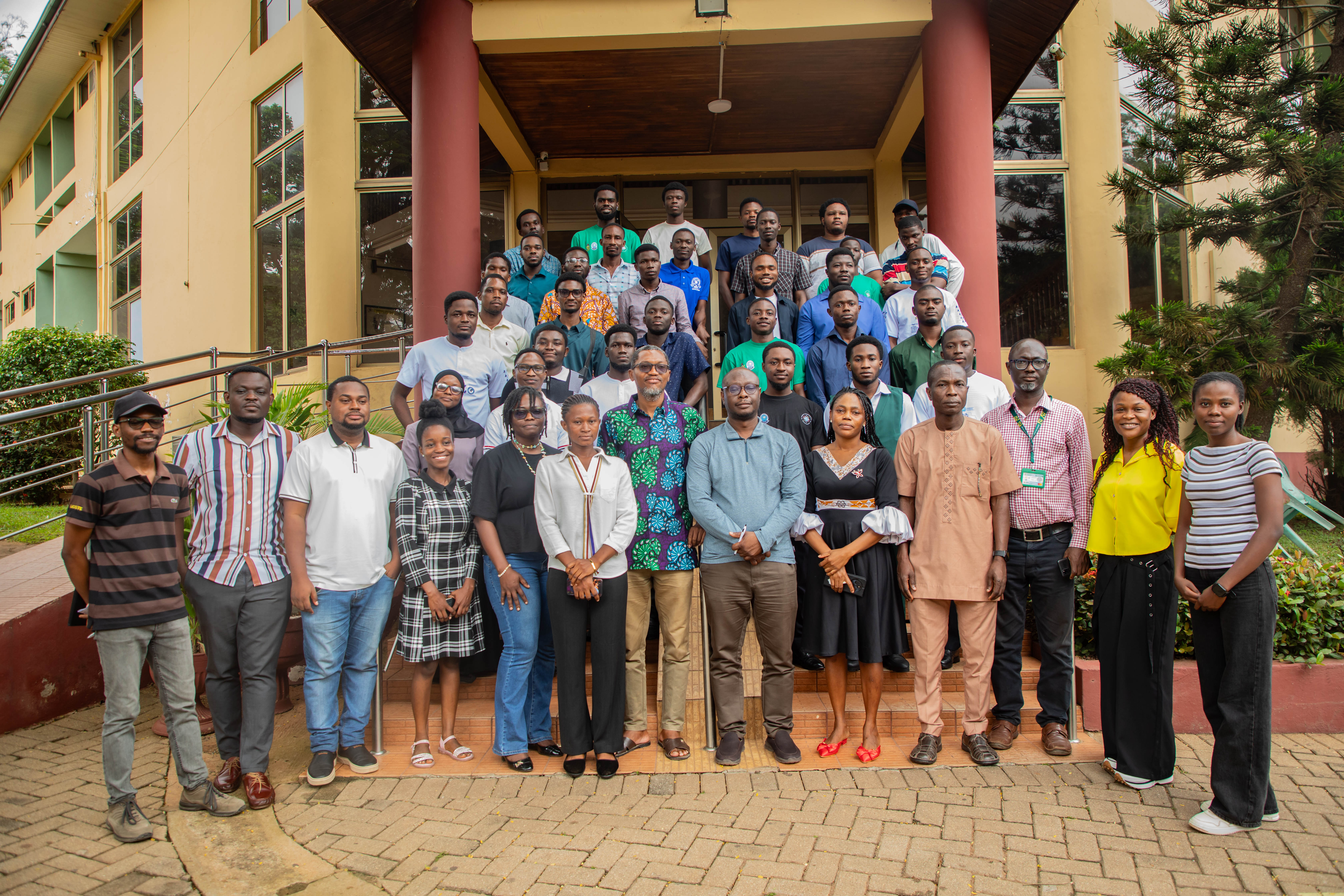
The project therefore places strong emphasis on early-career researchers, exposing them to instrumentation, geophysical data processing and interdisciplinary research.
Russell Swift of the British Geological Survey, a partner in the project, said the collaboration was helping KNUST build capability to move from static, one-off geophysical observations towards ERT monitoring.
Dr. Steven Yeboah, Principal Research Scientist at the CSIR-Crops Research Institute, similarly noted that importing research instruments could become unsustainable when there was limited local capacity to maintain or repair them.
The local approach, he said, provides an opportunity to develop a team of researchers capable of building and maintaining the systems within Ghana.
Dr. Patricia Amankwah Yeboah, Systems Agronomist at the International Centre for Tropical Agriculture (CIAT), said the project had highlighted the value of bringing expertise from different disciplines together to address agricultural challenges.
The technology built by the researchers will support the wider project's investigation into how soil-water dynamics respond to agricultural practices and how those changes relate to crop performance.
The project is about creating the expertise to build, maintain and adapt scientific instruments locally.