Representatives of Ghanaian Virtual Meeting Ahead of African International Conference on Quantum Computing and Simulation
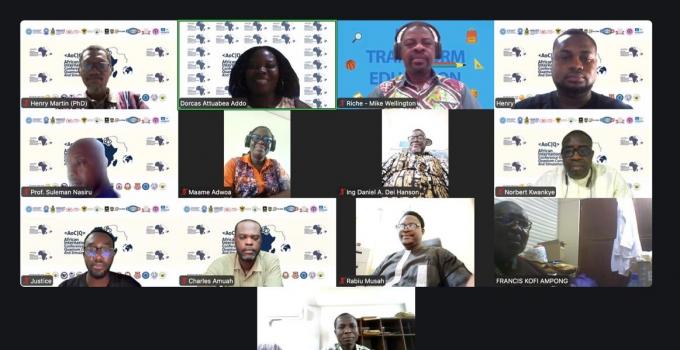
Ghanaian scientists, policymakers and industry representatives have begun national discussions on quantum science and technology ahead of the African International Conference on Quantum Computing and Simulation scheduled for February 2026 at KNUST.
The meeting, held online, was on Ghana’s position in the emerging quantum landscape, and the steps needed to build a coordinated national strategy.
Moderating the session, Dorcas Attuabeah Addo said the engagement was intended to help the country “support shaping a national quantum strategy for Ghana.”
She added, “We are standing at a point where multiple possibilities for our technological future exist. The choices we make and the collaboration we form will determine what becomes real for us.”
Head of the Department of Physics at KNUST, Professor Francis Ampong, delivered the welcome address.
He noted that the global shift toward quantum technologies places new demands on national capacity.
“About 10 to 15 years ago, a conference on quantum computing and simulation would have sounded ambitious. But today the concept has caught up with us. We no longer have any excuse if we are left behind.” he said.
He added that the pre-conference meeting was intended to bring together experts from academia and industry to refine activities toward the main conference in February 2026.
“It is my hope that you will bring your experience to help break down the barriers of quantum computing and simulation,” he said.
The Ghana Commission for UNESCO also outlined its role.
Speaking on behalf of the Commission, Richie-Mike Wellington, Deputy Secretary-General (General Operations), said Ghana’s participation aligns with wider continental goals.
“Quantum science is shaping the future of global competitiveness. Ghana’s participation is symbolic and strategic.” he said.
He explained that the Commission has been working with universities and partners to expand public awareness, strengthen research capacity and prepare for the global closing ceremony of the International Year of Quantum (IYQ) in 2026, which Ghana will host.
“Through youth forums, outreach programs and collaboration with universities, we aim to nurture a new generation of innovators. Our long-term ambition is to build a strong foundation for Ghana’s quantum future.” he said.
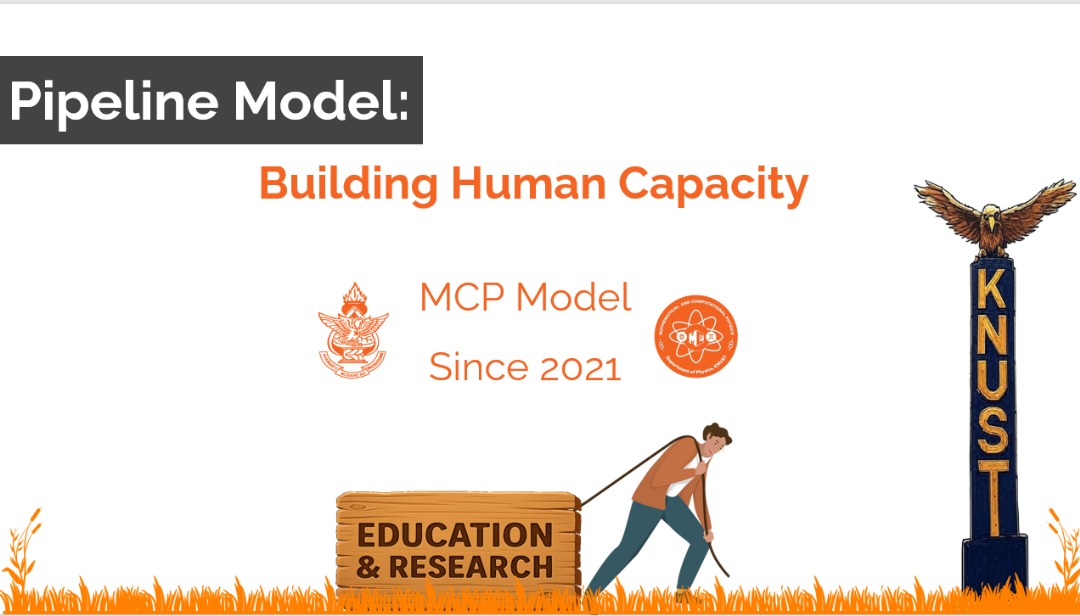
A technical overview was then delivered by the a lecturer and coordinator of the Mathematical and Computational Physics (MCP) Unit at the Department of Physics, KNUST, Dr Henry Martin, who presented the current state of quantum research in the country.
“Quantum science and technology has been in the research community for some time. But recent developments in computation, chemistry and engineering have expanded the field.” he said.
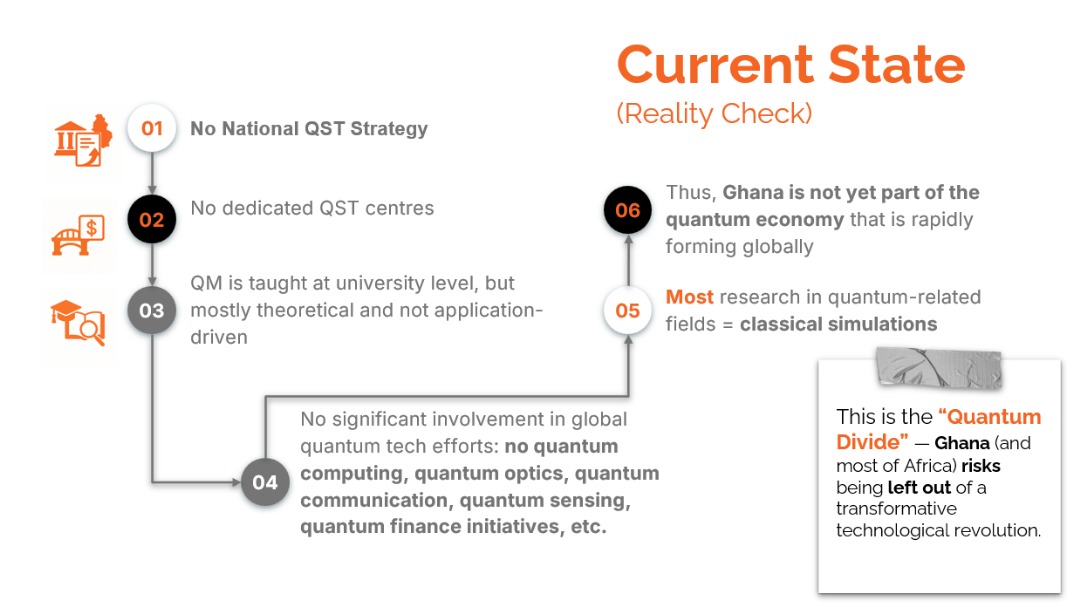
He noted that seven universities in Ghana are currently active in quantum-related research.
“We see work in quantum finance, cyber security, chemistry, simulation, photonics and materials,” he explained.
He also highlighted gaps in infrastructure, including no/limited access to high-performance computing and quantum computers.
“We are doing a lot of work, but we do not have the resources,” he said.
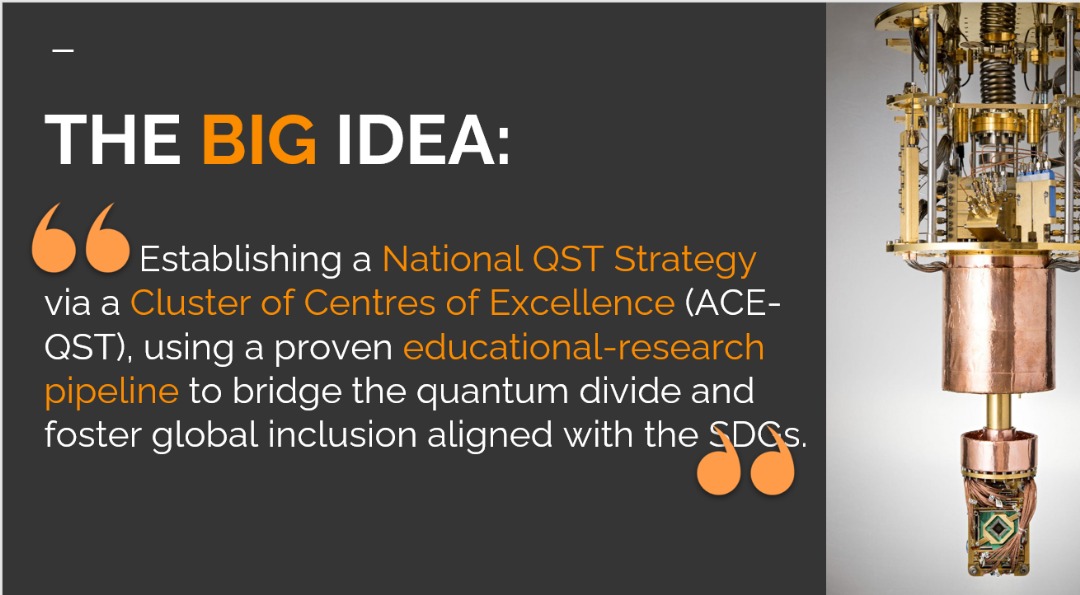
The stakeholders agreed on the need for a coordinated national plan.
Participants discussed building hubs across universities, linking academia with agencies such as CSIR, Ghana Standards Authority, and the Ghana Water Company, and creating opportunities for students and young researchers.
“The quantum transition is underway. Countries that invest early will help shape the future. Ghana is ready to take part.” Richie-Mike Wellington said.